Gardening Services Willesden — Recycling and Sustainability
 Gardening Services Willesden believes every green space in Willesden can be managed with an eco-first approach. Our sustainable rubbish gardening area policies prioritise reuse, composting and low-carbon collection so that garden waste becomes a resource, not a problem. We work alongside local borough waste strategies to ensure the way we collect and separate materials aligns with Brent's wider approach to waste separation, including separate streams for food waste, garden organics and mixed recyclables.
Our Willesden gardening services team follows a clear hierarchy: reduce, reuse, recycle. We use on-site segregation points when possible and encourage clients to adopt simple separation practices — paper, card, green waste and mixed recycling are kept distinct. This makes handover to transfer stations and community partners more efficient and increases the proportion of material that can be diverted from landfill to composting or reuse streams.
 We set an ambitious recycling percentage target: 80% of all garden and landscaping waste diverted from landfill within two years of service adoption. That target applies to green waste, clean timber, soil and stone suitable for reuse, and bundled living plants or shrubs that charities can rehome. To reach this goal, we monitor weekly collection returns, track tonnages to local processing facilities, and adapt routing and separation tactics to maximise diversion.
Local Transfer Stations and Responsible Disposal
We deliver sorted loads to local transfer stations and regional handling centres that serve north-west London, including facilities that support Brent and neighbouring boroughs. By directing material to these authorised sites we maintain a clear paper trail and make sure green waste goes to industrial composting or anaerobic digestion where possible. Our partnerships with transfer stations help avoid contamination and reduce the need for landfill tipping.
To reinforce transparency we include a basic manifest with every large garden clearance. That manifest lists material types, weights and the destination transfer station so customers can see how their waste was processed. This transparency helps us and our clients aim for the recycling target and ensures compliance with local environmental policy.
Our approach also recognises the boroughs' recycling rules: small household collections follow Brent Council guidance on separating food and garden waste while larger commercial loads are sorted to match the contractual requirements of the receiving transfer stations. These operational details are part of our training programme for all teams working on-site.
Partnerships with Charities and Community Reuse
 We actively partner with local and London-wide charities to rehome plants, tools and usable timber. Organisations such as Groundwork London, The Conservation Volunteers and community allotment networks frequently accept donations of healthy shrubs, planters and soil for community projects. Giving usable materials a second life reduces disposal volumes and strengthens community green spaces.
Typical recycling activities we facilitate include:
- Segregation and delivery of green waste for composting or AD.
- Recovery of clean timber for reuse or chipping.
- Donation of salvageable garden furniture and tools to local charities.
- Processing of topsoil and stones for reuse in landscaping projects.
These activities slot into the sustainable rubbish gardening area strategy and help us meet both the environmental target and local needs for material reuse.
 Our fleet is a core part of the sustainability plan. We use a mix of low-carbon vans, including electric vans for short urban trips and Euro-6 efficient diesel or hybrid vans for longer routes to transfer stations. Route optimisation software reduces mileage, and scheduled multi-drop routing minimises empty returns. The result is lower CO2 emissions across the Willesden gardening services operation.
We track vehicle emissions as part of our environmental reporting and aim to increase the share of zero-emission kilometres each year. Vehicle choices are complemented by small operational changes — compressed loads where safe, reduced idling, and team training on eco-driving — that collectively cut fuel use and urban pollution.
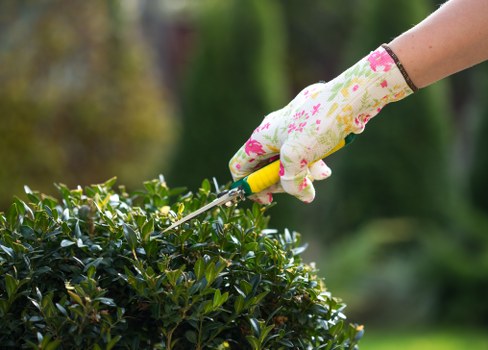 In practice, sustainable waste disposal for garden work in Willesden looks like this: pre-site waste audits, on-site separation stations, charity donations for reusable items, delivery to authorised transfer stations, composting of fine green waste, chipping of woody material for mulch, and meticulous manifesting of loads. Our team provides clients with clear explanations of these steps so the benefits to both the local environment and the wider borough are evident.
Summary of commitments: we commit to an 80% recycling target for garden waste, active partnerships with charities and transfer stations, a low-carbon vehicle fleet, and strict alignment with Brent's waste separation approach. These measures make our gardening services in Willesden a practical, measurable way to support an eco-friendly waste disposal area and to foster sustainable rubbish gardening area practices across the community.